

Article Highlights
- Military dictatorships often increase defense spending while cutting funding for education and healthcare
- Weak institutional oversight under military rule allows corruption and wasteful spending to grow unchecked
- Currency printing and inflation are common short-term fixes used by military dictatorships facing budget shortfalls
- Foreign investors tend to avoid countries under military dictatorships due to legal and political uncertainty
- Argentina’s military government of the late 1970s offers a clear dictatorship story showing long-term economic damage
I love politics and have a deep interest in political issues; therefore, I have spent years studying how governments shape the economic fortunes of their people, and one pattern keeps repeating across continents and decades. Military dictatorships almost always leave a country’s economy weaker than they found it. This is not an accident of history. It comes from a specific set of decisions that soldiers in charge of a nation tend to make when they trade the barracks for the presidential palace.
In this article, I want to walk through why military dictatorships struggle to run an economy well, what specific policy mistakes cause the damage, and what history teaches us about rebuilding after these regimes end. I will also share a real-world example that shows exactly how this plays out on the ground.
Why Military Dictatorships Struggle With Economic Management
Running an army and running an economy require completely different skills. Officers are trained to give orders and expect obedience, but markets do not respond to command the way soldiers do. This mismatch is one of the biggest reasons military dictatorships end up damaging the economies they control.
A military government usually seizes power quickly, often through a coup, and then has to govern without the checks that normally slow down bad decisions. Parliaments get suspended, courts get sidelined, and the free press gets restricted. Without these institutions pushing back, military dictatorships can pass economic policies that sound good in a speech but fail badly in practice.
The Loss of Institutional Checks
Civilian governments, even weak ones, usually have opposition parties, independent judges, and journalists who question spending decisions. Military dictatorships remove most of these checks in the name of order and stability. Once that oversight disappears, corruption and wasteful spending tend to grow because nobody with real power is asking hard questions.
Common Economic Mistakes Made by Military Dictatorships
I have noticed the same mistakes appearing again and again wherever military dictatorships have taken control. These are not random errors. They come from the incentives that generals face once they hold power.
1. Prioritizing Defense Spending Over Development
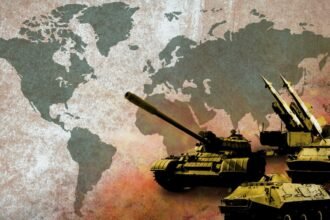
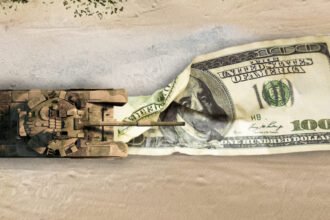
Military dictatorships almost always increase defense budgets because the armed forces see themselves as the guarantor of the regime’s survival. Money that could go into education, healthcare, or infrastructure gets redirected toward weapons, personnel, and loyalty payments to keep the officer corps happy.
2. Nationalizing Industries Without a Plan
Some military dictatorships take over private businesses and industries, believing that state control equals national strength. Without the technical expertise or market discipline that private owners bring, these industries often become inefficient and drain public funds instead of generating growth.
3. Printing Money to Cover Budget Gaps
When military dictatorships face a shortfall between spending and revenue, a common shortcut is printing more currency. This approach tends to trigger inflation and, in the worst cases, currency collapse. Ordinary citizens end up paying the price through rising prices for food, fuel, and basic goods.
4. Scaring Away Foreign Investment
Investors avoid uncertainty, and military dictatorships create plenty of it. Sudden changes in law, unpredictable enforcement, and the risk of asset seizure make foreign companies hesitant to bring capital into a country ruled by generals. This shortage of investment slows job creation and technology transfer for years.
5. Suppressing Skilled Labor and Free Thought
Universities, research institutions, and independent media often come under heavy restriction during military rule. Skilled professionals frequently leave the country in search of freedom and opportunity elsewhere, a pattern often called brain drain. This loss of talent weakens a nation’s long-term economic potential.
The Corruption Problem Inside Military Dictatorships
Corruption is not unique to military dictatorships, but it tends to flourish under them because accountability structures are so weak. Contracts get awarded to allies of the regime rather than the most capable bidder. Public funds sometimes disappear into private accounts held by officers and their families.
Over time, this corruption compounds the damage caused by bad policy. Even a technically sound economic plan can fail if the money meant to implement it is diverted before it reaches its purpose.
A Real World Dictatorship Story
One dictatorship story that illustrates these patterns clearly comes from Argentina’s military government of the late 1970s and early 1980s. The generals who took power promised to restore order and fix the economy after years of political instability.
Instead, the country experienced heavy borrowing from abroad, a costly and unnecessary war over the Falkland Islands, and a currency that lost much of its value. By the time civilian rule returned, Argentina was carrying a debt burden that would shape its economy for decades. Economists often cite this dictatorship story as a clear case of how military rule can leave lasting financial scars long after the soldiers return to their barracks.
Similar patterns, though with different details, have appeared under military governments in other parts of the world. The specifics change, but the underlying economic mistakes tend to look familiar once you know what to search for.
How Countries Recover After Military Dictatorships
The good news is that economies can recover once military dictatorships end, though the process is rarely quick or easy. Rebuilding trust with investors, restoring independent institutions, and paying down inherited debt usually take many years of consistent effort from civilian leadership.
Countries that recover fastest tend to share a few traits. They rebuild independent central banks, restore a free press that can expose corruption, and open their economies back up to trade and investment. None of this happens overnight, but the direction matters more than the speed.
Expert Tip for Readers Studying This Topic
If you are researching military dictatorships and their economic impact for academic or professional purposes, always compare data from before, during, and after the regime. A single snapshot in time can be misleading, but a full timeline reveals the true cost of authoritarian economic management.
Final Thoughts
Military dictatorships are not always doomed to destroy an economy, but history shows this outcome far more often than not. The combination of weak institutions, heavy defense spending, corruption, and investor fear creates conditions where bad policy thrives, and good policy rarely survives contact with reality.
As someone who covers these topics for Truth Social, I find it important to separate the political debate around military rule from the economic evidence. The numbers and case studies speak clearly, even when opinions about military dictatorships remain divided across different countries and cultures.
Understanding these patterns matters beyond academic interest. Citizens, investors, and policymakers all benefit from recognizing the warning signs early, long before a country finds itself trying to recover from the damage that military dictatorships so often leave behind.