

5 Article Highlights
- SpaceX has set its IPO valuation at approximately $1.75 trillion, aiming to raise $75 million through public share sales in what could become the largest IPO in history.
- Starlink, the company’s satellite internet division, is the real financial engine with an estimated $12.8 billion in revenue and over 8.4 million subscribers in 2025 alone.
- Starship, despite costing SpaceX over $15 billion in development, carries enormous long-term potential for NASA lunar missions, Mars colonization, and launching next-generation Starlink satellites.
- SpaceX acquired xAI and is now positioning itself as an AI company, with plans for orbital data centers powered by solar energy to reduce the burden on Earth-based infrastructure.
- Wall Street’s reaction to Starship test failures could create serious stock price volatility, which is a risk SpaceX has deliberately avoided by staying private for so long.
Why the SpaceX IPO Valuation Is Set at Nearly $2 Trillion
I have been following the space industry for years, and I will be honest with you: nothing has surprised me quite like watching SpaceX go from a scrappy startup blowing up rockets in the Pacific to a company now telling the world it is worth nearly two trillion dollars. That number sounds almost made up. But the more you look at what SpaceX actually does today, and how much of our everyday digital infrastructure depends on it, the more it starts to make sense.
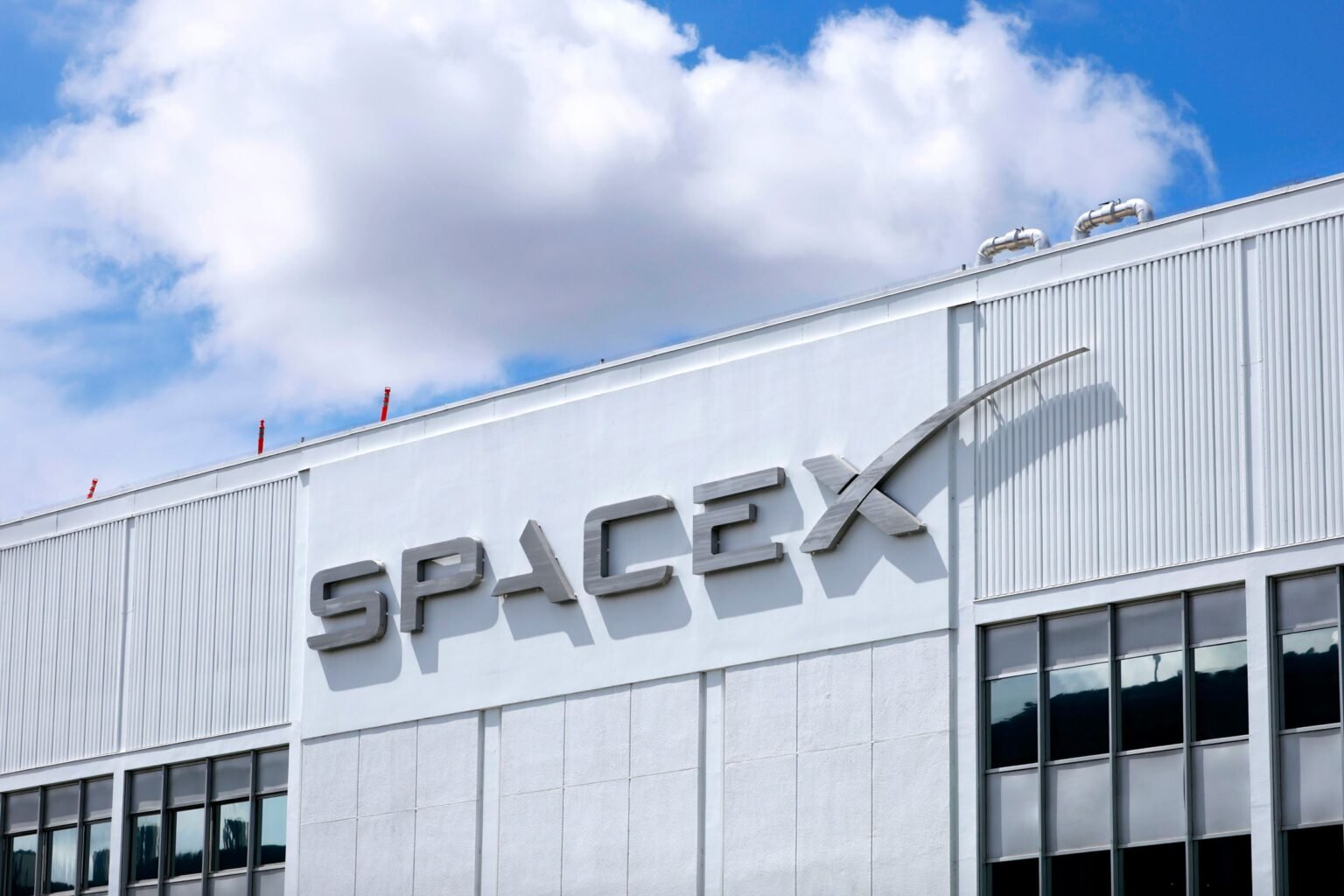
SpaceX is preparing for what could be the largest IPO in history. The company has set its SpaceX IPO valuation at $1.75 trillion and plans to raise $75 million through public share sales. For context, that puts it ahead of most space companies combined and places it in the same conversation as Amazon. This article walks through every part of the business to help you understand where that number actually comes from.
The Falcon 9 Is Still the Backbone of American Spaceflight
When people think of SpaceX, they usually picture a Falcon 9 rocket landing itself on a drone ship in the middle of the ocean. I remember the first time I watched that happen live. It felt like science fiction. Today, it is just a Tuesday in Florida.
The Falcon 9 has been flying for 16 years. It has completed over 600 missions, carried astronauts to the International Space Station, and delivered critical defense and science satellites into orbit. It is not an exaggeration to say the US space industry depends heavily on this one rocket right now. Competitors like Blue Origin’s New Glenn are gaining ground, but the Falcon 9 holds a reliability record that is genuinely hard to challenge.
What makes the launch business more complicated to value is that most Falcon 9 flights are for Starlink, SpaceX’s own satellite internet service. Those internal flights do not generate outside revenue. External launch services brought in an estimated $5 billion in 2025, but the actual profit margins are something only SpaceX knows. Still, the launch business matters because it keeps the operational machine tight and the team sharp.
Starship Is a Bet on the Future, and It Is an Expensive One
If the Falcon 9 is the business, Starship is the dream. SpaceX has spent more than $15 billion developing Starship at its Starbase facility in South Texas, and it has produced 11 flights to space so far. Some of those flights ended in dramatic explosions. Some made history.
Here is what I find genuinely fascinating about Starship: it is the first rocket ever designed to be fully reusable. Not partially reusable like the Falcon 9 booster. Fully. The booster comes back to the launch mount and gets caught by mechanical arms. The ship itself is designed to return too. If SpaceX actually pulls this off at scale, the cost of getting to orbit drops dramatically, which changes everything about what humans can do in space.
NASA has selected Starship as the Human Landing System for its Artemis program, which means astronauts returning to the Moon depend on it. SpaceX also needs Starship to launch its next generation of Starlink satellites, the v3 series. Without Starship moving into orbital operations, several key parts of the SpaceX IPO valuation story get delayed.
The one real concern here is what happens when Starship fails in front of millions of people watching live on a public stock market. We have seen how badly rocket failures hit companies like Rocket Lab and Astra in the market. Elon Musk has cited this exact reason for keeping SpaceX private for so long. Going public means every anomaly becomes a financial headline.
Starlink Is the Real Reason the SpaceX IPO Valuation Makes Sense
I want to be direct here: if you are trying to understand why any serious investor would put a nearly two trillion dollar price tag on SpaceX, it starts and ends with Starlink.
Starlink brought in an estimated $12.8 billion in revenue in 2025 and had approximately 8.4 million subscribers. That is not a niche product. That is a global internet service provider operating from orbit. It reaches remote farms in Africa, fishing vessels in the Pacific, battlefield units in active conflict zones, and rural homes across America that cable companies never bothered to connect.
The reason the SpaceX IPO valuation is so high is that Starlink is essentially subsidizing everything else. It pays for Falcon 9 launches, which get cheaper every year as the hardware is reused. It funds Starship development. It gives SpaceX the financial cushion to operate in ways traditional aerospace companies simply cannot.
Competition is coming. Amazon’s Project Kuiper is the most credible challenger, though it is still building scale. OneWeb continues to serve enterprise and government clients. But right now, Starlink is the only low Earth orbit satellite internet service available directly to regular consumers globally. That head start is enormous and not easy to close.
Starshield Quietly Adds a National Security Revenue Stream
Not every part of SpaceX’s business makes headlines, and Starshield is a good example of that. It is Starlink’s counterpart for national security applications. The US Department of Defense has contracted SpaceX to produce specialized satellites for military communications and surveillance.
The logic is straightforward. SpaceX already has the manufacturing infrastructure to build satellites at scale. The military has the budget and the need. SpaceX gets a premium contract for work that fits naturally into its existing capabilities. It is not the core of the business, but it is a reliable and high-margin side stream that any serious company would be glad to have.
SpaceX Is Now Positioning Itself as an AI Company
This is the part of the SpaceX story that raised my eyebrows the most, and honestly, it might be the most important part for understanding the full SpaceX IPO valuation in the current market environment.
SpaceX acquired xAI, the company behind the Grok AI chatbot and the social media platform X. On its face, that sounds like a strange move for a rocket company. But Musk’s stated rationale is more interesting than it first appears. He argues that orbital data centers powered by solar energy represent the next evolution of AI infrastructure.
Think about how much energy AI computing consumes on the ground. Data centers require enormous amounts of electricity, water for cooling, and physical land. Several US states have already begun exploring legislation to restrict new data center construction. Moving processing power into space, where solar energy is constant, and there is no noise or heat complaint from neighbors, is a genuinely interesting solution to a real problem.
It also enables something else: on-orbit AI processing for satellites. Earth observation satellites, debris tracking systems, and communication platforms could all benefit from local processing power rather than sending data down to Earth for analysis. That reduces latency, cost, and reliance on ground infrastructure.
Is the AI market worth what people say it is? Honestly, nobody knows for certain. We are in a moment that feels similar to the early web era or the blockchain craze. Enormous capital is chasing the space, and companies without an AI story are struggling to attract investment. SpaceX now has that story, and it connects logically to things it already does. Whether the long-term value holds up depends on how AI itself develops over the next decade.
What the SpaceX IPO Actually Means for Regular Investors
When SpaceX shares finally hit the public market, there will be demand. A lot of it. Institutional investors with large portfolios will buy significant positions. SpaceX fans and space enthusiasts who have watched every launch for years will want a piece of the story. That combination almost guarantees a strong opening.
But it is worth keeping a clear head about what you are actually buying. The SpaceX IPO valuation reflects not just current earnings but significant expectations about Starship becoming operational, Starlink continuing to grow globally, orbital AI infrastructure becoming real, and NASA missions succeeding. A lot needs to go right.
SpaceX is one of the most genuinely innovative companies I have ever watched up close. But publicly traded rocket companies have a history of dramatic stock swings tied to events that the public does not fully understand. A Starship test that ends in an explosion might be a data-rich learning milestone to an engineer, but a disaster headline to a retail investor checking their portfolio.
Mid Breaker Expert’s Opinion
The SpaceX IPO valuation of nearly $2 trillion is ambitious. But it is not arbitrary. Behind that number is a satellite internet service generating billions annually, a rocket business that has no real peer in reliability, a next-generation launch system with transformational potential, a defense revenue stream, and now an AI angle that speaks directly to where capital is flowing right now.
The question is not really whether SpaceX is worth a lot. It clearly is. The question is whether the public market, with all its emotion and short-term thinking, is the right environment for a company that sometimes needs to blow things up to learn how to fly better. We are about to find out.
This technology article is written for informational purposes only. It does not constitute financial or investment advice.