

Key Highlights
• The Ranga Billa Case involved the kidnapping, assault, and murder of siblings Geeta and Sanjay Chopra in New Delhi in August 1978, sending shockwaves across the entire country.
• Kuljeet Singh (Ranga) and Jasbir Singh (Billa) were arrested within days, tried in a fast-tracked court, and executed by hanging on January 31, 1982.
• The case led to significant debate in India about capital punishment, the criminal justice system, and the safety of children in urban spaces.
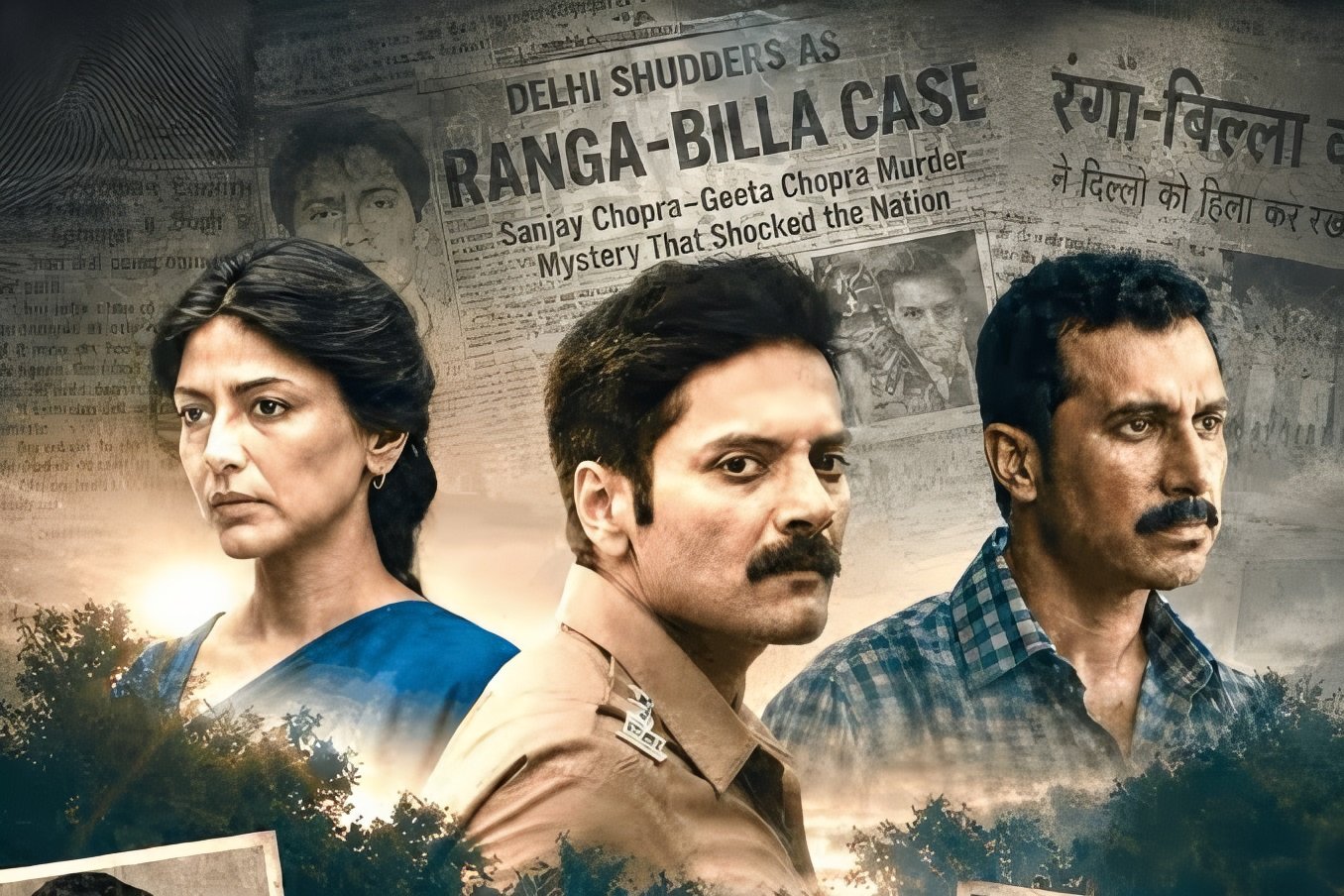
• Prime Video’s series Raakh brings this true story to a new generation, sparking renewed conversations about justice, grief, and societal responsibility.
• The memory of Geeta and Sanjay Chopra lives on through public tributes, the outrage that fueled legal reform discussions, and now through streaming storytelling.
Background Story of The Ranga Billa Case
A Crime That Stopped India in Its Tracks
Some true crime and social stories stay with you long after you have read the last line. The Ranga-Billa Case is one of those stories. I first came across this case while watching Prime Video’s web series Raakh, and I found myself unable to stop thinking about it for days afterward. The show pulled me in with its raw storytelling, but what really shook me was discovering that this was not fiction. This was real. It happened in India in 1978, and it changed the country forever.
The Ranga Billa Case took place in August 1978 in New Delhi. It involved two siblings, Geeta Chopra, who was sixteen years old, and Sanjay Chopra, who was fourteen. They were the children of a naval officer, and they were kidnapped, assaulted, and murdered by two men who became infamous across the country. The case moved through the courts at an unusually fast pace and ended with both convicts being hanged in 1982. But the story did not end there. The Ranga Billa Case continued to live in public memory, in legal discussions, and now in popular culture through Prime Video’s series Raakh, which has brought the events of 1978 back into national conversation.
Who Were Geeta and Sanjay Chopra
Before getting into the crime itself, it is important to understand who these two young people were. Geeta and Sanjay Chopra were not just victims of the Ranga Billa Case. They were siblings who were full of life, children of a disciplined naval family, growing up in a city they trusted. Their father, Naval Commander M. S. Chopra, was a man who served his country with dedication. The family lived in the ordered, principled household that believed hard work and good values would protect them from the worst of the world.
On the afternoon of August 26, 1978, Geeta and Sanjay set out from their home. What happened next became the defining tragedy of a generation. They were lured into a car under pretenses in Vasant Vihar, a neighborhood in South Delhi. The two men who abducted them, Kuljeet Singh, who was commonly known as Ranga, and Jasbir Singh, who was known as Billa, took them away from everything familiar and subjected them to horrors that the family and the nation would never fully recover from.
Sanjay tried to fight back. He jumped from a moving vehicle in an attempt to escape and suffered serious injuries. Geeta was assaulted and ultimately killed. Sanjay died later from the injuries he sustained. The Ranga Billa Case became synonymous in India with the worst kind of predatory violence against the innocent, and the grief that followed was not just personal. It was national.
The Arrest and the Trial That Moved at Unprecedented Speed
What followed the crimes in the Ranga Billa Case was a police investigation that, to its credit, moved quickly. Ranga and Billa were identified and arrested within days. The evidence against them was strong, and the court proceedings moved at a speed that was unusual for India’s legal system, which had a reputation even then for long delays.
The nation was watching. Public anger was enormous. Newspapers covered the Ranga Billa Case with the kind of intensity that reflected just how deeply the killings had affected ordinary people. Parents across India were terrified. The idea that two children from a respectable family could be abducted from a Delhi street in broad daylight shook every assumption people had about safety in urban India.
The Sessions Court convicted both Ranga and Billa and sentenced them to death. The Delhi High Court upheld the sentence. The Supreme Court of India also upheld the conviction and the death penalty. The President of India rejected their mercy petitions. On January 31, 1982, Kuljeet Singh Ranga and Jasbir Singh Billa were hanged at Tihar Jail in New Delhi. It was one of the fastest executions from crime to hanging that India had seen, taking less than four years from the date of the crime.
Why the Ranga Billa Case Still Matters Decades Later
One of the questions I find myself returning to when I think about this case is why it continues to matter so much. There have been many crimes in India’s history. Many have been horrific. But the Ranga Billa Case holds a particular place in public memory, and I think it comes down to a few distinct reasons.
First, the victims were young, innocent, and entirely blameless. There was no ambiguity, no complexity in how society viewed Geeta and Sanjay Chopra. They were children going about their day. The randomness of what happened to them, the fact that they could have been anyone’s children, made the grief universal.
Second, the Ranga Billa Case sparked intense debate about capital punishment in India that continued for years. Critics of the death penalty pointed to the case as an example of mob justice influencing the courts. Supporters argued that this was exactly the kind of crime for which the ultimate punishment existed. The debate has never been fully resolved in India, and the Ranga Billa Case remains a reference point every time it resurfaces.
Third, the case had a measurable impact on public safety awareness and policy discussions in Delhi and beyond. Parents became more cautious. Schools began discussing safety with students. The tragedy gave rise to a kind of collective civic consciousness about protecting children in public spaces that, while incomplete, was real and lasting.
Commander Chopra and the Weight of a Father’s Loss
No account of the Ranga Billa Case would be complete without acknowledging the man who lost everything and still stood tall through it all: Commander M. S. Chopra. He watched the courts move through every level. He watched the mercy petitions get rejected one by one. He waited, and when justice finally came on January 31, 1982, he was there.
His composure throughout the proceedings became a symbol in itself. Here was a man who had served his country, raised his children with pride, and then had them taken from him in the most brutal way imaginable. And yet he did not collapse into bitterness or chaos. He sought justice through the system, and the system, for once in this particular instance, delivered it within a reasonable timeframe.
The Chopra family’s dignity in the face of their grief became part of the moral weight that the Ranga Billa Case carried for decades. Their story was not just about crime and punishment. It was about how a family carries an irreplaceable loss and what society owes to those who suffer at the hands of its worst members.
Raakh on Prime Video: Bringing the Story to a New Generation
Decades after the events of 1978, Prime Video’s series Raakh has revisited the Ranga Billa Case for a contemporary audience. The show arrives at a moment when true crime storytelling has found an enormous and engaged global audience. People want to understand how crimes happen, what motivates the people who commit them, and how society and families respond to extraordinary loss.
Raakh does not shy away from the emotional weight of the Ranga Billa Case. At Social Stories, we have covered the series as part of our broader look at how Indian streaming platforms are engaging with real historical events. What strikes me most about the show is its awareness that these were real people. Geeta and Sanjay Chopra were not characters in a script. They were human beings, and the show carries that responsibility seriously.
The production has sparked fresh discussions about the Ranga Billa Case among younger audiences who may have been entirely unaware of the events of 1978. Many viewers who watched Raakh then went back to read accounts of the actual trial, the courtroom testimonies, and the statements made by Commander Chopra. This is exactly the kind of engagement that well-made true crime storytelling can generate, and it is a meaningful tribute to Geeta and Sanjay Chopra that a new generation is encountering their story.
The Debate Around the Death Penalty
Every time the Ranga Billa Case is revisited, the question of capital punishment comes back with it. India has executed relatively few people since independence, and the death penalty is reserved for what the courts call the rarest of rare cases. The Ranga Billa Case was specifically cited by the Supreme Court of India as falling within this category, and the speed with which the execution was carried out reflected the court’s view of the severity of the crimes.
I have read arguments on both sides of this debate, and I understand the weight each perspective carries. Those who oppose capital punishment argue that the state taking a life sets a moral precedent that undermines civilization’s highest ideals. Those who support it in cases like the Ranga Billa Case argue that some crimes are so severe, so devoid of redemptive possibility, that the only proportionate response is the permanent removal of the offender from the world.
What I observe is that the Ranga Billa Case remains one of the most cited examples in Indian legal and ethical discussions about the death penalty, precisely because the facts were so stark. There was no ambiguity about guilt. There was no question of mistaken identity. The evidence was overwhelming, and the crimes were among the most devastating that the country had witnessed. Whatever one’s view on capital punishment, the case forces a genuine confrontation with the question in a way that few others do.
How the Ranga Billa Case Influenced Urban Safety Consciousness in India
One of the less-discussed but genuinely significant impacts of the Ranga Billa Case was its effect on how urban middle-class India thought about the safety of children in public spaces. In 1978, Delhi was a city that still felt manageable in many ways, a capital that had not yet grown into the sprawling, complex metropolis it would become. And yet the Ranga Billa Case demonstrated that danger could emerge without warning, in broad daylight, in a residential neighborhood.
Parents began to have different conversations with their children after the Ranga Billa Case. Schools started to take safety protocols more seriously. The idea that you could trust any stranger who offered a ride or assistance was forever altered by what happened to Geeta and Sanjay Chopra. This was not a pleasant lesson, but it was a necessary one, and it came at a terrible price.
The case also contributed to a growing demand among citizens for faster and more effective police response to crimes against children. While systemic change was slow, the Ranga Billa Case planted seeds of expectation in the public mind that the justice system must work urgently when children are the victims.
The Legacy of Geeta and Sanjay Chopra in Indian Memory
What strikes me most when I reflect on the Ranga Billa Case is that Geeta and Sanjay Chopra are genuinely remembered. Not just as victims, but as people. Their names are spoken with care. Their story is told with grief. Their father’s quiet dignity became part of how an entire nation understood what it meant to hold itself together in the face of impossible loss.
There is a memorial awareness in India around this case that transcends the typical treatment of crime victims in the media. The Ranga Billa Case produced something rare: a sustained public commitment to not forgetting. This is partly because the case was so closely followed at the time, and partly because Commander Chopra’s presence in public life kept the memory alive with grace and without sensationalism.
The arrival of Raakh on Prime Video is itself a form of legacy. It says that what happened to these two young people in 1978 still matters. That their lives, cut short in the most cruel way, are worth understanding, mourning, and learning from. The Ranga Billa Case is not a piece of history to be filed away. It is a story that asks questions of us that we still do not fully have answers to.
Understanding What Drove the Crime
In covering the Ranga Billa Case, it is worth asking who Kuljeet Singh Ranga and Jasbir Singh Billa actually were. They were not mysterious figures. They were young men with criminal histories who had made a series of choices that culminated in the events of August 1978. Ranga had prior run-ins with the law. Billa was his associate.
What the Ranga Billa Case revealed about them was not some incomprehensible evil, but rather the outcome of criminality that went unchecked until it reached a catastrophic endpoint. The system had failed to stop them before they reached Geeta and Sanjay Chopra, and that failure is part of the reckoning that the case demands. It is a question that every society must ask: how do we identify and interrupt dangerous patterns before they produce irreversible harm?
The Ranga Billa Case did not produce satisfying answers to these questions. It produced two hangings, a family that would never be whole again, and a nation left to wrestle with its own capacity to protect its children. That wrestling continues, even now, in the conversations sparked by Raakh and in the ongoing debates about crime, punishment, and prevention in India.
Why Stories Like This Must Be Told Carefully
Every time the Ranga Billa Case is revisited, whether in a documentary, a news article, a book, or a streaming series, there is a responsibility that comes with the storytelling. These were real people. Geeta Chopra, Sanjay Chopra, their father, their family. They are not props in an entertainment product. They are the center of a story about grief, justice, and the obligations that a society owes to those it fails.
The best accounts of the Ranga Billa Case, including what Raakh attempts to do on Prime Video, hold this responsibility clearly. They do not sensationalize. They do not reduce Geeta and Sanjay to their final moments. They ask us to see these two young people as fully human, and to understand that what happened to them is not just a story about two criminals. It is a story about all of us, about the world we build and whether it is safe enough for the people we love.
That is why the Ranga Billa Case endures. Not because it was the most complex crime in Indian history, or because the legal proceedings were the most dramatic. It endures because it is a human story at its most raw and its most heartbreaking, and because the people at the center of it deserved better from the world they lived in.
Raakh – Amazon Prime Video Trailer
I Think, This Story That Refuses To Be Forgotten
The Ranga Billa Case is now almost five decades old. The world India inhabits in 2025-26 is vastly different from the country it was in 1978. And yet the questions the case raises, about justice, about the safety of children, about what we owe each other as members of a society, have not aged at all.
Geeta and Sanjay Chopra were sixteen and fourteen years old. They were somebody’s children. They had futures that were taken from them. The Ranga Billa Case, for all the legal discussion and moral debate it has generated, always returns to that simple, devastating fact.
Prime Video’s Raakh gives this story new life, and the conversations it is generating are exactly the kinds of conversations a functioning society needs to have. Not comfortable conversations, not easy ones, but honest ones about what we failed to protect, who we failed to stop, and how we carry the memory of those we lost in ways that actually mean something.
The Ranga Billa Case will continue to be remembered. And as long as it is remembered honestly, with care for the people it was really about, that remembrance serves a purpose that goes beyond history or crime or law. It keeps faith with two young people who deserved to live.