

Key Highlights
• Political interference is the single biggest threat to any education system, turning schools into tools of power rather than centers of learning.
• Chronic underfunding starves an education system of the resources it needs, leaving teachers underpaid and students without proper facilities.
• An outdated curriculum disconnects the education system from real-world needs, producing graduates who cannot compete in the modern job market.
• Teacher neglect and low professional standards weaken the education system from the inside, since no system can rise above the quality of its educators.
• Deep inequality within the education system, driven by class, gender, or geography, creates a divided society and holds entire nations back from progress.
Top Threats to a Nation’s Education System
I have seen it firsthand. I have watched children walk miles to reach a school with no roof, sit in classrooms where the teacher shows up three days a week, and graduate without knowing how to write a proper job application. These are not isolated incidents. They are symptoms of a broken education system, and they are far more common across the world than most governments are willing to admit.
Every country at some point faces threats to its education system. Some manage those threats and come out stronger. Others ignore the warning signs until the damage is irreversible. Based on what I have seen, read, and experienced, there are five core forces that, when left unchecked, can destroy the education system of any nation. And in this article, I also want to talk specifically about why the education system in Pakistan has been struggling and continues to decline year after year.
1. Political Interference in the Education System
Nothing kills an education system faster than politicians treating it as a tool for their own interests. I have seen this pattern repeat across multiple countries. When a new government comes in, it rewrites the curriculum. When it goes out, the next government rewrites it again. Students end up learning a version of history and civic values that shift with every election cycle. This constant interference destroys the credibility of the entire education system.
Political appointments also plague the education system. School principals, university chancellors, and curriculum board members are often chosen based on political loyalty rather than professional merit. When unqualified people are placed in charge of important decisions, the education system suffers at every level.
In a healthy education system, policymaking is guided by research, expert advice, and the long-term needs of students. In a politically corrupted education system, it is guided by what helps the ruling party maintain its grip on power. That distinction makes all the difference in the world.
2. Chronic Underfunding That Starves the Education System
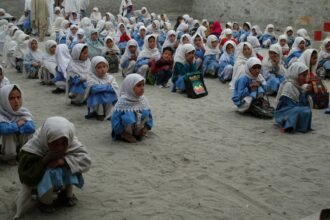
Money is not everything in education, but the absence of it is devastating. I have visited government schools where students sit on the floor because there are no desks. I have spoken with teachers who buy their own chalk because the school cannot afford supplies. These are the everyday realities of an underfunded edu system, and they add up to a generation of students who receive far less than they deserve.
A properly funded edu system needs decent school buildings, trained teachers, updated textbooks, access to technology, and support systems for students who fall behind. When any of these elements are missing due to budget cuts or governmental neglect, the entire edu system begins to erode from the bottom up.
Countries that invest seriously in their education system tend to see long-term economic growth, lower crime rates, and greater social stability. Countries that treat education as an afterthought in their budget reap the consequences for decades. Underfunding is not a minor inconvenience. It is a slow-moving disaster for any education system.
3. An Outdated Curriculum That Makes the Edu System Irrelevant
I once spoke with a young man who had completed twelve years of schooling and a university degree, only to find that none of it had prepared him for the actual job market. He had memorized textbooks written in the 1990s, studied theories with no practical application, and graduated without a single marketable skill. His experience is not unique. It is the product of an education system stuck in the past.
An education system that does not evolve with the times becomes irrelevant. The world is changing rapidly. Industries are transforming. The skills required to succeed in 2026 are very different from what was needed in 2000. If the curriculum inside the edu system does not reflect these changes, students graduate into a world they were never prepared for.
Rote memorization, overemphasis on exam scores, lack of critical thinking, and no room for creativity are all signs of an education system that has not kept pace with the world. Countries that thrive are those that build an education system around skills like problem solving, digital literacy, communication, and adaptability.
4. Neglect of Teachers Inside the Education System
I want to say this clearly: no education system can be better than its teachers. When a country fails its teachers, it fails its entire edu system. I have seen talented educators leave the profession because salaries were too low, working conditions were too poor, and professional development was nonexistent. Every time a good teacher walks away, the education system loses something it cannot easily replace.
Teacher training is often ignored or treated as a checkbox exercise in struggling education systems. Teachers are hired, placed in classrooms, and left to figure things out on their own. Without proper training, support, and mentoring, even well-intentioned teachers struggle to deliver quality education. The students in those classrooms pay the price.
Countries with strong edu systems treat teachers as professionals. They pay them competitive salaries, invest in ongoing training, and give them the autonomy to teach effectively. When an education system respects and supports its teachers, those teachers pass that value on to every student they teach.
5. Deep Inequality That Divides the Education System
Perhaps the most heartbreaking thing I have witnessed is how inequality tears an education system apart from the inside. In the same city, in the same country, children from wealthy families attend schools with air-conditioned classrooms, international curricula, and highly qualified teachers. In contrast, children from poor backgrounds sit in crumbling buildings with overworked, underpaid teachers who are doing their best under impossible conditions.
This kind of inequality does not just hurt individual students. It fractures the edu system itself. When the quality of education depends entirely on a family’s wealth or geographic location, the education system stops being a tool of progress. It becomes a tool that reinforces existing gaps in society.
Gender inequality, ethnic discrimination, and urban-rural divides all contribute to a fractured education system. Girls in some regions are denied schooling altogether. Children in rural areas have no access to quality teachers or resources. Minority communities are marginalized within the edu system. All of these forms of inequality compound over time and weaken the nation’s future from its very foundation.
Why Pakistan’s Education System Is Declining Day by Day
Pakistan’s education system is a case study in what happens when all five of the problems I described above exist at the same time. Having followed this issue closely and spoken with educators, students, and parents across the country, I can say with confidence that the decline is real, it is serious, and it is getting worse.
Severely Low Education Budget
Pakistan consistently allocates less than two percent of its GDP to edu, one of the lowest rates in the entire world. This means the education system is chronically starved of funds. Schools lack basic infrastructure, libraries are empty or nonexistent, and science labs are a luxury that most government schools cannot afford. When a country spends this little on its education system, the results are predictable and painful.
Dual Education System Creating a Divided Society
Pakistan operates with two completely parallel education systems running side by side. The elite send their children to expensive English-medium private schools that follow international curricula. The majority attend Urdu-medium government schools with outdated books and untrained teachers. This dual education system does not just create an academic gap. It creates two different classes of citizens with entirely different opportunities and worldviews.
Rampant Ghost Schools and Ghost Teachers
One of the most damaging problems in Pakistan’s education system is the presence of ghost schools and ghost teachers. These are schools that exist only on paper and teachers who collect government salaries but never show up to teach. Billions of rupees are lost every year to this kind of corruption, while real students in real classrooms go without the resources and instructors they need. This level of institutional dishonesty is devastating to any educational system.
A Curriculum That Has Not Kept Up with the World
For decades, Pakistan’s education system relied on rote learning and memorization rather than understanding and application. Students were rewarded for repeating information rather than for thinking critically. Although there have been some reform efforts, the curriculum in most government schools still does not equip students with the digital, analytical, or professional skills they need to compete locally or globally. The educational system keeps producing graduates who are technically literate but practically unprepared.
Political Instability and Changing Policies
Every time a new government takes power in Pakistan, it brings a new education policy. Curricula are changed, exam systems are restructured, and education ministers push their own agendas. This constant disruption means there is never enough time for any reform to take root. The education system never gets the stability it needs to grow and improve. Students and teachers are left to adapt to new systems again and again, losing years of progress in the process.
High Dropout Rates, Especially Among Girls
Pakistan has one of the highest out-of-school child populations in the world. Millions of children, particularly girls in rural and conservative areas, never complete their basic schooling. Poverty forces families to pull children out of school early to work or get married. This enormous dropout crisis means the education system is failing before it even gets a real chance to reach the people who need it most. A nation cannot build a strong educational system when a significant portion of its children are not in school at all.
Low Teacher Quality and Poor Training Standards
In many parts of Pakistan, becoming a teacher is seen as a last resort rather than a respected career choice. Teacher salaries are low, training is inadequate, and professional development opportunities are rare. Many teachers teaching science or mathematics at the secondary level have not themselves mastered the subjects they teach. When the people guiding students through their formative years are not properly equipped, the entire education system suffers the consequences.
My Personal Opinion on the Education System
An education system is not just a collection of schools and textbooks. It is the backbone of a nation’s future. When it is strong, it lifts people out of poverty, fuels innovation, and builds more just and stable societies. When it is destroyed by politics, neglect, inequality, or poor investment, the damage takes generations to repair.
At Truth Social Education, we believe that understanding these threats is the first step toward fixing them. Whether you are a parent, a teacher, a student, or a policymaker, the educational system belongs to all of us. It is worth fighting for, investing in, and protecting with everything we have.
The countries that will lead the world tomorrow are the ones investing in their education system today. And the ones that ignore these five warnings will find themselves struggling long into the future, just as Pakistan is struggling right now.